AWIQLI FlexTouch Pen 3 mL (Insulin Icodec 700 U/mL)
By Namo Pharmacy · 4 August 2026
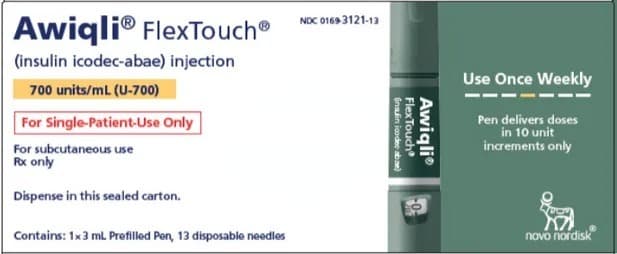
AWIQLI FlexTouch Pen (Insulin Icodec 700 U/mL) – Complete Guide: World's First Once-Weekly Basal Insulin for Type 2 Diabetes
📋 Quick Overview:
💉 Product Name: AWIQLI FlexTouch Pen 3 mL
🧪 Active Ingredient: Insulin Icodec 700 Units/mL
🏭 Manufacturer: Novo Nordisk
🌍 Breakthrough: World's First Once-Weekly Basal Insulin
🎯 Indication: Type 2 Diabetes Mellitus in Adults
💊 Administration: Subcutaneous Injection – Once Every 7 Days
📦 Pack: 3 mL FlexTouch Pre-filled Pen
🔬 Insulin Type: Ultra-Long Acting Basal Insulin Analogue
⚕️ Status: Prescription Only Medicine (Rx)
🌐 Approvals: FDA (USA), EMA (Europe), CDSCO (India)
⚠️ Important Medical Notice:
AWIQLI (Insulin Icodec) is a prescription-only medicine. It must only be used under the supervision and prescription of a qualified endocrinologist or diabetologist. Insulin therapy requires careful monitoring of blood glucose levels. Never self-prescribe or self-adjust insulin doses. Improper use can cause life-threatening hypoglycemia.
Introduction
Managing Type 2 diabetes has always required a delicate balance — keeping blood glucose levels stable throughout the day and night, adhering to complex medication schedules, and navigating the burden of daily injections that many patients find intimidating, inconvenient, or painful. For decades, basal insulin therapy — which provides a steady, background level of insulin to control fasting blood glucose — has required daily injections, every single day, often for the rest of a patient's life. Missed doses, injection fatigue, needle anxiety, and the sheer psychological burden of daily insulin administration have been among the biggest barriers to effective diabetes management. AWIQLI (Insulin Icodec), developed by Novo Nordisk, represents a landmark revolution in diabetes care. It is the world's first and only once-weekly basal insulin — a single injection every seven days that provides the same background insulin coverage previously requiring seven separate daily injections. Approved by the US FDA, the European Medicines Agency, and now available in India, AWIQLI is not just a new insulin — it is a fundamentally new approach to basal insulin therapy that has the potential to transform how millions of people manage their diabetes. This comprehensive guide explains everything you need to know about AWIQLI FlexTouch Pen — what makes it scientifically unique, how it works in the body, its clinical evidence, proper usage, safety profile, and who may benefit from this remarkable advancement in insulin therapy.
📋 TL;DR – Key Points About AWIQLI
✅ What It Is: World's first once-weekly basal insulin (Insulin Icodec 700 U/mL)
✅ Revolutionary: One injection per week replaces 7 daily basal insulin injections
✅ Mechanism: Ultra-long half-life (~1 week) through albumin binding technology
✅ Efficacy: Non-inferior to daily insulin degludec in multiple Phase 3 trials
✅ For: Type 2 Diabetes in adults — insulin-naive or switching from daily basal insulin
✅ Device: Easy-to-use FlexTouch pre-filled pen (3 mL, 700 U/mL)
✅ Safety: Comparable hypoglycemia rates to once-daily insulins
✅ Approval: FDA approved May 2023; available in multiple countries including India
⚠️ Prescription Required: Must be prescribed and monitored by a doctor
What is AWIQLI? – Understanding Insulin Icodec
AWIQLI is the brand name for Insulin Icodec, a novel basal insulin analogue engineered by Novo Nordisk with one singular, transformative goal: to provide effective basal insulin coverage with just one injection per week instead of one injection per day. It belongs to the class of ultra-long-acting basal insulin analogues — but with a pharmacological half-life so extended (approximately 7 days) that it maintains stable, steady-state insulin levels throughout an entire week from a single subcutaneous dose.
Understanding Basal Insulin – The Foundation of Diabetes Management
🔬 What is Basal Insulin and Why Do You Need It?
The human pancreas continuously secretes insulin in two distinct patterns:
• Basal Insulin (Background Insulin): A slow, continuous, low-level secretion 24 hours a day, 7 days a week — even during fasting and sleep. This prevents the liver from releasing excessive glucose into the bloodstream between meals.
• Bolus Insulin (Mealtime Insulin): A rapid surge of insulin released in response to meals to handle the glucose spike from food digestion.
In Type 2 Diabetes, the pancreatic beta cells progressively lose their ability to produce adequate insulin, and eventually many patients require basal insulin supplementation to:
→ Control fasting blood glucose (FBG) levels
→ Prevent overnight glucose elevation
→ Reduce HbA1c to target levels
→ Provide the metabolic foundation upon which mealtime management builds
The Evolution of Basal Insulin – From NPH to Once-Weekly
Generation Insulin Duration Frequency Limitation
1st Generation NPH Insulin 12-18 hours Twice daily Peaks cause hypoglycemia; variable absorption
2nd Generation Insulin Glargine (U100) ~24 hours Once daily Still requires daily injection
3rd Generation Insulin Degludec (U200) ~42 hours Once daily Still requires daily injection
4th Generation 🆕 Insulin Icodec (AWIQLI) ~168 hours (7 days) Once WEEKLY Revolutionary – fewest injections ever
How Does AWIQLI Work? – The Science of Once-Weekly Insulin
The development of a true once-weekly insulin was considered a major scientific challenge for decades. The key question engineers faced was: how do you make insulin stay active in the body for 7 full days without causing prolonged or unpredictable hypoglycemia? The answer lies in a brilliant molecular engineering approach.
The Molecular Engineering Behind Insulin Icodec:
🔬 How Novo Nordisk Engineered a Week-Long Insulin:
Insulin Icodec is a human insulin analogue with three key structural modifications that collectively create its extraordinary duration of action:
Modification 1: Albumin Binding
• A fatty diacid chain is attached to the insulin molecule
• This fatty chain has a very high affinity for serum albumin — the most abundant protein in human blood
• When injected subcutaneously, Insulin Icodec binds strongly to albumin in the bloodstream
• Albumin acts as a "carrier protein" and "reservoir" — slowly releasing the insulin over days
• Albumin has a long half-life in the body (~19 days), which dramatically extends insulin's residence time
Modification 2: Reduced Insulin Receptor Binding Rate
• Amino acid substitutions at positions A14 and B16 of the insulin molecule
• These modifications reduce the rate at which free (unbound) insulin interacts with insulin receptors
• This creates a slower, more gradual glucose-lowering effect spread over 7 days
• Prevents rapid spikes in insulin activity that could cause hypoglycemia
Modification 3: Protease Resistance
• Additional modification at position B26
• Makes the molecule more resistant to enzymatic degradation by proteases
• Prevents premature breakdown of the insulin molecule
• Ensures the molecule remains intact and active throughout the week
📊 Pharmacokinetic Profile of AWIQLI:
Parameter Insulin Icodec (AWIQLI) Insulin Degludec (Daily) Insulin Glargine U300
Half-life ~7 days (168 hours) ~25 hours ~19 hours
Time to Steady State ~3-4 weeks (3-4 doses) ~3-4 days ~3-4 days
Dosing Frequency Once weekly Once daily Once daily
Concentration 700 U/mL 200 U/mL 300 U/mL
Action Profile Flat, peakless over 7 days Flat, peakless ~24h Flat, peakless ~24h
What Happens After You Inject AWIQLI:
⏱️ Step-by-Step: AWIQLI in Your Body
Injection (Day 1): Insulin Icodec is injected subcutaneously (under the skin). A depot (reservoir) forms at the injection site.
Absorption (Hours 1-24): Insulin Icodec molecules slowly absorb from the subcutaneous depot into the bloodstream. They immediately bind to albumin (>99.7% protein bound).
Slow Release (Days 1-7): Albumin-bound insulin gradually dissociates from albumin in tiny amounts, releasing free insulin that can bind to insulin receptors in muscle, fat, and liver.
Glucose Lowering (Continuous): Released insulin suppresses hepatic glucose production and promotes glucose uptake — continuously, smoothly, throughout the entire week.
Steady State (Week 3-4): After 3-4 weekly doses, insulin levels reach a stable steady state with minimal fluctuation — providing consistent, predictable basal coverage.
Next Injection (Day 7/Week 2): The next weekly dose maintains steady-state levels.
Clinical Evidence – The ONWARDS Trial Program
AWIQLI's development was supported by one of the most comprehensive clinical trial programs in basal insulin history — the ONWARDS (Once-Weekly iNsulin icodec vs. comparAtoR insulin Studies) program, comprising 6 large Phase 3 clinical trials involving over 4,000 patients worldwide.
ONWARDS Trial Program Overview:
Trial Patient Population Comparator Duration Key Finding
ONWARDS 1 T2D, insulin-naive on OADs Insulin Degludec (daily) 52 weeks Icodec superior HbA1c reduction
ONWARDS 2 T2D, switching from daily basal insulin Insulin Degludec (daily) 26 weeks Non-inferior HbA1c; comparable safety
ONWARDS 3 T2D, insulin-naive on OADs Insulin Glargine U100 (daily) 26 weeks Superior HbA1c reduction
ONWARDS 4 T2D, on basal-bolus regimen Insulin Glargine U100 (daily) 26 weeks Non-inferior HbA1c; similar hypoglycemia
ONWARDS 5 T2D, insulin-naive + GLP-1 RA users Insulin Degludec (daily) 26 weeks Superior HbA1c reduction
ONWARDS 6 Type 1 Diabetes Insulin Degludec (daily) 26 weeks Non-inferior HbA1c; higher hypoglycemia (not approved for T1D)
Key Clinical Results:
📊 HbA1c Reduction (ONWARDS 1 – Primary Analysis):
• Insulin Icodec (Once Weekly): HbA1c reduced from ~8.5% → ~7.0% (reduction of ~1.5%)
• Insulin Degludec (Once Daily): HbA1c reduced from ~8.5% → ~7.2% (reduction of ~1.3%)
• Result: Icodec was statistically SUPERIOR in HbA1c reduction vs. daily degludec
• More patients reached HbA1c target <7% with Icodec than with Degludec
📊 Fasting Blood Glucose:
• Significant reduction in fasting plasma glucose achieved with both insulins
• Icodec showed comparable or better FBG control vs. daily comparators
• Stable, predictable glucose profiles throughout the week
📊 Hypoglycemia Profile:
• Overall hypoglycemia rates were comparable or slightly higher with Icodec vs. daily insulins
• Clinically significant hypoglycemia: similar rates in most trials
• Important: Due to week-long half-life, hypoglycemia episodes may last longer and require more prolonged management
• No unexpected or unusual hypoglycemia patterns observed
📊 Patient-Reported Outcomes:
• Significantly reduced injection burden — 52 injections/year vs. 365 injections/year
• Improved treatment satisfaction scores in patient surveys
• Better adherence potential due to weekly vs. daily dosing
• Comparable quality of life improvements
Why This Clinical Evidence Matters:
The ONWARDS program demonstrated that once-weekly dosing with Insulin Icodec is not a compromise — it achieves equivalent or superior glycemic control compared to the gold-standard daily basal insulins (Degludec and Glargine) with the enormous practical advantage of 6 fewer injections per week. This means better patient adherence, reduced injection fatigue, and potentially better real-world outcomes for millions of people who struggle with daily insulin regimens.
AWIQLI FlexTouch Pen – Device Overview
💉 About the FlexTouch Delivery Device:
AWIQLI comes in Novo Nordisk's FlexTouch pre-filled pen — one of the most advanced insulin delivery devices available. The FlexTouch platform is designed for ease of use, accuracy, and patient comfort.
FlexTouch Pen Key Features:
Feature Specification Patient Benefit
Pen Type Pre-filled, disposable No insulin cartridge loading required
Volume 3 mL per pen Multiple doses per pen
Concentration 700 Units/mL Smaller injection volume needed
Dose Selector 2-unit increment dial Precise dosing control
Maximum Dose Per pen specifications Accommodates most dose requirements
Injection Button Low push force required Easy for elderly, arthritic patients
Dose Window Large, clear display Easy to read, confirms dose
End-of-Dose Click Audible + tactile click Confirms complete dose delivery
Needle Compatibility Universal pen needles (NovoFine/compatible) Patient can choose preferred needle length
Why FlexTouch Over Vials + Syringes?
✓ No mixing or loading — ready to use
✓ More accurate dosing vs. drawing from vials
✓ More discreet — pen-like appearance
✓ Portable — no separate syringe needed
✓ Lower injection force — more comfortable
✓ Dose memory possible — can see last dose selected
Who is AWIQLI Indicated For?
Approved Indications:
✅ AWIQLI is Indicated For:
• Primary Indication: Improvement of glycemic control in adults with Type 2 Diabetes Mellitus
• Insulin-Naive Patients: Adults with T2D who have not previously used insulin and whose blood glucose is inadequately controlled on oral antidiabetic agents (OADs) or GLP-1 receptor agonists
• Switching Patients: Adults with T2D already on once-daily basal insulin (glargine, degludec, detemir) who wish to reduce injection frequency
• Basal-Bolus Regimen: Can be used as the basal component in combination with mealtime (bolus) insulin
• Combination with OADs: Can be used alongside metformin, SGLT2 inhibitors, DPP-4 inhibitors, GLP-1 RAs
❌ NOT Indicated For:
• Type 1 Diabetes: Not approved (higher hypoglycemia risk shown in ONWARDS 6)
• Diabetic Ketoacidosis (DKA): Not for treatment of DKA
• Children and Adolescents: Safety and efficacy not established in <18 years
• Hyperglycemic Emergencies: Short-acting insulin required for acute management
Ideal Candidate Profile for AWIQLI:
Patient Type Why AWIQLI May Be Beneficial
Injection-Phobic Patients Dramatically fewer injections may reduce needle anxiety
Forgetful/Non-Adherent Patients Weekly dosing easier to remember and maintain
Busy Professionals Weekly schedule fits modern busy lifestyle better
Elderly Patients Fewer injections reduces caregiver burden; easier management
Patients Already on Daily Basal Insulin Maintain control with 85% fewer basal injections
Insulin-Naive Patients Starting Insulin Weekly schedule less daunting for new insulin users
Travel-Heavy Individuals Weekly injection eliminates daily travel-related dose management
Patients on GLP-1 RAs Already Adding weekly basal insulin maintains consistent weekly injection rhythm
Dosage & Administration – How to Use AWIQLI
⚠️ Critical Disclaimer:
The dosage information below is for educational reference only. All insulin dosing must be individually determined and supervised by your prescribing physician or endocrinologist. Never adjust your insulin dose without consulting your doctor. Incorrect insulin dosing can cause life-threatening hypoglycemia or hyperglycemia.
General Dosing Principles (As per Prescribing Information):
Starting Dose – Insulin-Naive Patients:
• Typical starting dose: 70 units once weekly
• Doctor may adjust based on individual patient factors (weight, FBG, HbA1c, other medications)
• Dose titration occurs gradually based on fasting blood glucose response
Switching from Daily Basal Insulin:
• From Degludec or Glargine U100: Multiply total daily dose by 7, then use as weekly dose (with possible loading dose in first week as per physician guidance)
• Conversion requires careful medical supervision — do not self-convert
• A loading dose strategy may be used in the first week to quickly reach steady-state levels
Dose Titration:
• Dose adjustments are made based on fasting blood glucose readings
• Typically adjusted once weekly (matching the injection day)
• Your doctor will set a target fasting glucose range and titration algorithm
• Important: Due to 7-day half-life, dose changes take 2-3 weeks to fully reflect — do not over-titrate
Fixed Weekly Day:
• Administer on the same day each week (e.g., every Monday)
• If a dose is missed: administer as soon as remembered if more than 3 days remain until next scheduled dose
• If less than 3 days: skip missed dose, resume on next scheduled weekly day
• Never administer two doses within 3 days of each other
Injection Technique – Step-by-Step Guide:
💉 Correct Injection Technique for AWIQLI FlexTouch Pen:
Preparation:
• Wash hands thoroughly with soap and water
• Check pen label — confirm it is AWIQLI and check expiry date
• Allow pen to reach room temperature if refrigerated (30 minutes before injection)
• Inspect insulin — should be clear and colorless; do not use if cloudy or discolored
• Note: AWIQLI does not require mixing/rolling (unlike NPH insulin)
Attach Needle:
• Remove pen cap
• Attach a new, sterile pen needle for each injection
• Remove both outer and inner needle caps
Prime the Pen (New Pen Only):
• Dial 2 units
• Point needle upward, tap pen
• Press injection button — a stream of insulin should appear at needle tip
• Repeat if no stream appears
Select Your Dose:
• Dial to your prescribed dose (in 2-unit increments)
• Verify dose in the dose window
Choose Injection Site:
• Recommended sites: Abdomen (belly), thigh, upper arm, or buttocks
• Rotate injection sites within each area to prevent lipodystrophy
• Do not inject into skin that is damaged, bruised, scarred, or has lipodystrophy
• Clean injection site with alcohol swab; let dry completely
Inject:
• Pinch up skin (if using short needle in thin patient)
• Insert needle at 90-degree angle (or 45 degrees if very thin)
• Press injection button fully and hold for 6 seconds minimum after dose window shows 0
• This ensures complete dose delivery
• Withdraw needle
Post-Injection:
• Apply gentle pressure with cotton — do not rub
• Remove and safely dispose of needle immediately after each use
• Replace pen cap
• Record dose and date in your diabetes diary
Injection Site Rotation – Why It Matters:
Repeated injections into the same spot cause lipodystrophy (fatty lumps or depressions under the skin) that alter insulin absorption rates and lead to unpredictable blood glucose control. Create a systematic rotation pattern — move at least 1 cm from the previous injection site and cycle through different areas of the body.
Storage & Handling of AWIQLI
🌡️ Storage Instructions:
Status Storage Condition Duration
Unopened Pen (Unused) Refrigerate at 2°C – 8°C (36°F – 46°F). Do NOT freeze. Until expiry date on label
In-Use Pen (After First Use) Room temperature — below 30°C (86°F). Do not refrigerate after first use. 8 weeks maximum
All Conditions Keep away from direct sunlight, heat, and freezing temperatures Always
⚠️ Important Storage Notes:
• Never freeze AWIQLI — frozen insulin is damaged and must be discarded
• Keep cap on when not in use — protects from light
• No needle attached during storage — prevents contamination and leakage
• Check appearance before each use — discard if cloudy, colored, or particles present
• Travel: Keep in insulated bag away from extreme temperatures; do not store in car glove compartment or boot in hot weather
• Air travel: Keep in carry-on luggage — aircraft cargo holds can freeze insulin
Side Effects & Safety Profile
Most Important Risk – Hypoglycemia:
🚨 Hypoglycemia (Low Blood Sugar) – Most Serious Risk
Hypoglycemia is the most common and potentially most dangerous side effect of ALL insulins, including AWIQLI. Because Insulin Icodec has a 7-day half-life, hypoglycemia episodes may be:
• More prolonged than with daily insulins
• Requiring more prolonged treatment — repeated glucose administration may be needed
• Monitored more closely during initial titration period
Recognize Hypoglycemia Symptoms:
Mild-Moderate Hypoglycemia Severe Hypoglycemia
Sweating, shakiness, trembling
Rapid heartbeat (palpitations)
Hunger, nausea
Dizziness, lightheadedness
Pale skin, cold sweat
Anxiety, irritability
Tingling around mouth
Blurred vision
Headache
Confusion, disorientation
Difficulty speaking
Loss of coordination
Seizures
Loss of consciousness
Coma (if untreated)
⚠️ MEDICAL EMERGENCY
Call ambulance immediately
Treatment of Mild-Moderate Hypoglycemia (Rule of 15):
1. Consume 15 grams of fast-acting carbohydrates: 3-4 glucose tablets, OR 150 mL fruit juice, OR 150 mL regular (non-diet) soft drink, OR 1 tablespoon honey
2. Wait 15 minutes and recheck blood glucose
3. If still low (<70 mg/dL), repeat
4. Once blood glucose normalizes, have a small snack containing complex carbs + protein
5. Important with AWIQLI: Due to long half-life, monitoring must continue for extended period — hypoglycemia may recur
Other Side Effects:
Side Effect Frequency Management
Hypoglycemia Very Common Monitor BG; treat promptly; adjust dose with doctor
Injection Site Reactions Common Redness, swelling, itching at injection site; rotate sites; usually resolves
Lipodystrophy Uncommon Fatty lumps or depressions; prevent by rotating sites; report to doctor
Weight Gain Common with all insulins Diet management; regular exercise; discuss with doctor
Edema (Fluid Retention) Uncommon Usually mild; monitor; report persistent swelling
Allergic Reactions Rare Local: redness, rash. Systemic (anaphylaxis): very rare but serious — seek immediate medical attention
Visual Disturbances Rare (with rapid glucose normalization) Usually temporary; notify doctor if persistent
Special Warnings & Precautions:
⚠️ Never Share Pens: Even with a new needle — sharing pens risks transmission of serious blood-borne infections (HIV, Hepatitis B, C)
⚠️ Driving: Hypoglycemia impairs driving ability — test blood glucose before driving; carry fast-acting glucose in vehicle
⚠️ Illness: Do not stop insulin during illness (even if eating less) — blood glucose often rises during illness. Contact doctor for "sick day rules"
⚠️ Surgery: Inform surgical team about insulin use; special perioperative management required
⚠️ Alcohol: Can mask hypoglycemia symptoms and increase hypoglycemia risk — use extreme caution
⚠️ Renal Impairment: Dose adjustments may be required — insulin requirements decrease with declining kidney function
⚠️ Hepatic Impairment: Insulin requirements may be reduced — monitor closely
⚠️ Pregnancy: Insulin icodec is not currently recommended in pregnancy — discuss with obstetrician/endocrinologist
⚠️ Elderly Patients: Higher risk of hypoglycemia — conservative dosing and careful monitoring required
Important Drug Interactions:
Drug/Substance Effect on AWIQLI Action Required
Other Antidiabetic Agents May enhance glucose-lowering (increased hypoglycemia risk) Dose adjustment may be needed; monitor closely
GLP-1 Receptor Agonists Additive glucose-lowering; excellent combination May allow lower insulin dose; monitor
Corticosteroids Raise blood glucose — may need higher insulin dose Monitor BG; discuss dose adjustment with doctor
Beta-Blockers May mask hypoglycemia symptoms; may prolong recovery More frequent BG monitoring; be extra vigilant
Alcohol Increases hypoglycemia risk; masks symptoms Avoid or minimize; extra monitoring
Thiazolidinediones (Pioglitazone) Increased fluid retention and heart failure risk Use with caution; monitor for heart failure signs
Thyroid Hormones, Growth Hormone May increase insulin requirements Monitor BG; dose adjustment possible
ACE Inhibitors, Salicylates, MAOIs May enhance hypoglycemia risk Increased BG monitoring; possible dose reduction
AWIQLI vs. Daily Basal Insulins – Comprehensive Comparison
Parameter AWIQLI (Icodec) Tresiba (Degludec) Lantus/Toujeo (Glargine)
Dosing Frequency Once WEEKLY Once daily Once daily
Annual Injections (Basal) ~52 ~365 ~365
Half-life ~7 days ~25 hours ~19 hours
Time to Steady State 3-4 weeks 3-4 days 3-4 days
Dose Titration Speed Slower (weekly adjustments) Faster (can adjust every few days) Faster (can adjust every few days)
HbA1c Efficacy Equal or Superior Excellent Excellent
Hypoglycemia Duration May be prolonged (monitor closely) Standard duration Standard duration
Flexibility of Dose Day ± 3 days flexibility if needed Can shift up to few hours Can shift up to few hours
Patient Adherence Potential Higher (weekly easier to remember) Moderate Moderate
Approved for Type 1 ❌ No ✅ Yes ✅ Yes
Manufacturer Novo Nordisk Novo Nordisk Sanofi
AWIQLI in India – Diabetes Landscape & Relevance
🇮🇳 India's Diabetes Burden – Why AWIQLI Matters:
The Scale of India's Diabetes Crisis:
• India is the "Diabetes Capital of the World" with over 101 million diabetics (IDF 2023)
• Additional ~136 million Indians have pre-diabetes
• Type 2 Diabetes accounts for >95% of cases
• Significant percentage of Type 2 diabetics will eventually require insulin therapy
• Treatment adherence is a major challenge in India's diverse, busy population
Why AWIQLI Is Particularly Relevant for India:
• Injection Stigma: Many Indian patients delay or resist insulin due to social stigma around injections — fewer injections may reduce psychological barriers
• Busy Lifestyles: Urban professionals and daily wage workers alike find daily injections difficult to maintain consistently
• Caregiver Support: For elderly patients, caregivers need to administer only one injection weekly
• Forgetfulness: Once-weekly dosing is more memorable — especially when tied to a specific day (e.g., "Insulin Monday")
• Temperature Challenges: While storage still requires refrigeration for unused pens, fewer injection preparations reduce exposure risk
• Healthcare Access: Patients in areas with weekly doctor/nurse visits can have injections supervised more practically
Regulatory Status in India:
• AWIQLI has received CDSCO (Central Drugs Standard Control Organisation) approval in India
• Available through licensed pharmacies with valid prescription from registered medical practitioner
• Prescribed by Endocrinologists and Diabetologists
Blood Glucose Monitoring While on AWIQLI
📊 Monitoring Requirements:
Why Regular Monitoring is Essential:
• AWIQLI's 7-day half-life means dose effects build slowly — monitoring tracks progress
• Titration decisions are based on consistent fasting glucose readings
• Hypoglycemia detection requires blood glucose measurement
Recommended Monitoring Schedule (General Guidance – Confirm with Your Doctor):
Phase Monitoring Frequency Key Readings
Initiation/Titration Phase Daily fasting BG; additional readings as advised Fasting, pre-meal, bedtime, when symptoms occur
Stable Phase As advised by doctor (may be less frequent) Fasting, periodic post-meal checks
During Illness Every 2-4 hours All readings — illness often raises BG significantly
Pre-Driving Always before driving Must be >100 mg/dL before driving
Exercise Days Before, during, and after exercise Exercise can cause delayed hypoglycemia
Target Blood Glucose Ranges (General — Your Doctor May Set Different Targets):
Measurement General Target
Fasting (Before Breakfast) 80-130 mg/dL (4.4-7.2 mmol/L)
2 Hours After Meals <180 mg/dL (<10 mmol/L)
Bedtime 100-140 mg/dL
HbA1c Target <7.0% for most adults (individualized)
*Targets are individualized. Elderly patients, those with hypoglycemia unawareness, or those with comorbidities may have different targets set by their doctor.
Lifestyle Considerations While Using AWIQLI
Diet & Nutrition:
• Consistent Carbohydrate Intake: Try to eat similar amounts of carbohydrates at similar times — sudden large changes can affect glucose levels significantly with any basal insulin
• Meal Timing: Maintain regular meal times to stabilize blood glucose patterns
• Alcohol: If consumed, always with food; monitor blood glucose carefully; inform your healthcare team
• Never Skip Meals without adjusting insulin — discuss sick day and fasting day management with your doctor
• Carry Fast-Acting Glucose Always: Glucose tablets, juice, or candy must be accessible at all times
Exercise:
• Exercise increases insulin sensitivity — glucose may drop during and after activity
• Check blood glucose before, during (if prolonged), and after exercise
• Discuss exercise plans with your doctor — dose adjustments may be needed
• Always carry fast-acting glucose during exercise
• Avoid injecting into exercising limbs — this accelerates absorption unpredictably
Travel:
• Carry insulin in carry-on luggage (aircraft cargo freezes insulin)
• Carry a doctor's letter explaining insulin therapy (for airport security)
• Carry more than enough supplies for the trip duration
• Time zone changes: once-weekly AWIQLI is less affected by time zone shifts than daily insulins — but discuss management with your doctor for significant time zone changes
• Keep pen in insulated travel case during hot weather
Frequently Asked Questions (FAQs)
Q1: What makes AWIQLI different from other insulins?
AWIQLI (Insulin Icodec) is the world's first and only once-weekly basal insulin. All other basal insulins require daily injections. This revolutionary dosing schedule is possible due to Insulin Icodec's unique molecular engineering — strong albumin binding creates a ~7-day half-life, providing stable basal insulin coverage for an entire week from a single injection. This means just 52 injections per year instead of 365 for daily insulins.
Q2: Is AWIQLI as effective as daily basal insulins?
Yes. The extensive ONWARDS clinical trial program (6 Phase 3 trials, 4000+ patients) demonstrated that AWIQLI achieves equivalent or superior HbA1c reduction compared to once-daily insulin degludec and glargine. In several trials, AWIQLI was statistically superior in HbA1c reduction vs. the daily comparator insulin.
Q3: Can AWIQLI be used for Type 1 Diabetes?
No. AWIQLI is currently only approved for Type 2 Diabetes in adults. The ONWARDS 6 trial studied it in Type 1 Diabetes and found higher rates of hypoglycemia compared to daily insulin degludec. The benefit-risk profile was not favorable for Type 1 Diabetes, and it is not approved for this indication.
Q4: What happens if I miss a dose of AWIQLI?
If you miss your weekly dose: administer it as soon as you remember, provided the next scheduled injection is more than 3 days (72 hours) away. Then return to your regular weekly schedule. If your next scheduled dose is within 3 days or fewer, skip the missed dose and take the next dose on the originally scheduled day. Never administer two doses within 3 days of each other. Always inform your doctor if you miss doses frequently.
Q5: Will I still need other diabetes medications with AWIQLI?
AWIQLI provides basal (background) insulin coverage only — it does not cover mealtime glucose spikes. Depending on your blood glucose levels and management goals, your doctor may prescribe AWIQLI: alone with lifestyle management; in combination with oral antidiabetic drugs (metformin, SGLT2 inhibitors, etc.); in combination with GLP-1 receptor agonists; or as the basal component in a basal-bolus regimen with mealtime insulin. This is a decision made by your endocrinologist based on your individual clinical picture.
Q6: How long does it take for AWIQLI to start working?
AWIQLI begins working from the first injection, but takes approximately 3-4 weeks (3-4 doses) to reach steady-state levels in the body. During this initial period, your doctor may use a "loading dose" strategy in the first week to more rapidly achieve therapeutic levels. You should notice gradual improvement in fasting blood glucose during the first few weeks, with stable full effect after approximately 1 month.
Q7: Can I adjust my AWIQLI dose myself?
Never adjust your AWIQLI dose without consulting your doctor. Dose titration of a once-weekly insulin with a 7-day half-life requires careful calculation and monitoring. Because dose changes take 2-3 weeks to fully reflect in blood glucose levels, premature dose adjustments can lead to significant hypoglycemia or hyperglycemia. Your doctor will provide you with a specific titration algorithm if self-titration is appropriate for your situation.
Q8: Can AWIQLI be mixed with other insulins?
No. AWIQLI must never be mixed with any other insulin or injectable medication. It is administered as a separate injection. If you also take mealtime (bolus) insulin, these are given as separate injections at different times.
Q9: Is AWIQLI safe during pregnancy?
AWIQLI is not currently recommended during pregnancy. There is insufficient data on its safety in pregnant women. If you are pregnant or planning pregnancy, discuss insulin options with your obstetrician and endocrinologist — human insulin or insulin analogs with established pregnancy safety profiles (such as insulin detemir or NPH) are typically preferred during pregnancy.
Q10: What should I do if I think I have hypoglycemia after taking AWIQLI?
If you experience symptoms of hypoglycemia (sweating, shakiness, dizziness, rapid heartbeat, hunger, confusion): 1) Check your blood glucose immediately if possible. 2) If blood glucose is below 70 mg/dL (or if you cannot check, if you have symptoms), consume 15 grams of fast-acting carbohydrates. 3) Recheck after 15 minutes and repeat if still low. 4) Important with AWIQLI: Due to the long half-life, hypoglycemia may recur after initial treatment — continue monitoring and have additional carbohydrates available. 5) Seek immediate emergency care if the patient cannot swallow, loses consciousness, or has seizures. 6) Inform your doctor about any hypoglycemia episodes so doses can be adjusted.
Q11: Can I inject AWIQLI into my arm?
Yes. AWIQLI can be injected into the abdomen (preferred), thigh, upper arm, or buttocks. As with all insulins, injection into the abdomen typically provides the most consistent absorption. Importantly, rotate injection sites to prevent lipodystrophy, and avoid injecting into areas with skin problems, lumps, or scarring.
Q12: How is AWIQLI prescribed and obtained in India?
AWIQLI requires a valid prescription from a registered medical practitioner (endocrinologist or diabetologist) in India. It is classified as a Schedule H prescription drug. It can be dispensed by licensed pharmacies upon presentation of a valid prescription. Your doctor will assess whether AWIQLI is appropriate for your specific situation, prescribe the correct starting dose, and set up a monitoring and titration plan.
Conclusion
AWIQLI (Insulin Icodec 700 U/mL) in the FlexTouch pen represents one of the most significant advances in basal insulin therapy in the history of diabetes management. The achievement of true once-weekly basal insulin delivery — backed by a comprehensive Phase 3 clinical program demonstrating equivalent or superior glycemic control with an excellent safety profile — marks a genuine paradigm shift in how we approach insulin therapy for Type 2 Diabetes. For the millions of adults with Type 2 Diabetes who struggle with the burden, inconvenience, stigma, and simple forgetfulness associated with daily insulin injections, AWIQLI offers a compelling new option: 52 injections per year instead of 365, with the same or better blood glucose control, in an easy-to-use FlexTouch pre-filled pen. The clinical evidence from the ONWARDS program is clear — AWIQLI is not a compromise. It achieves real, meaningful glycemic control while dramatically reducing the injection burden that is one of the biggest barriers to insulin adherence. In the Indian context — where over 100 million people live with diabetes, where injection stigma remains significant, where busy lifestyles make daily routines difficult, and where improving treatment adherence could prevent enormous morbidity — AWIQLI's once-weekly convenience could translate into real-world improvements in diabetes management at scale. As with all insulin therapy, AWIQLI must be used only under the supervision and prescription of a qualified endocrinologist or diabetologist who will assess your individual suitability, prescribe the appropriate starting dose, monitor your response, guide dose titration, and educate you on hypoglycemia management. If you have Type 2 Diabetes and are considering insulin therapy or looking to simplify your current insulin regimen, speak with your diabetes specialist about whether AWIQLI may be appropriate for you.
🎯 Key Takeaways:
✓ AWIQLI is the world's first once-weekly basal insulin — a revolutionary advancement
✓ One injection per week provides the same basal coverage as 7 daily insulin injections
✓ Clinically proven: equal or superior HbA1c reduction vs. daily basal insulins
✓ Unique albumin-binding technology creates ~7-day half-life
✓ For Type 2 Diabetes adults only (not approved for Type 1)
✓ Comes in easy-to-use FlexTouch pre-filled pen (3 mL, 700 U/mL)
✓ Requires careful monitoring — especially for prolonged hypoglycemia
✓ Dose changes take 2-3 weeks to fully reflect — never self-titrate
✓ Approved in India (CDSCO) — requires valid prescription
✓ Consult your endocrinologist to determine if AWIQLI is right for you
Medical Disclaimer
The information provided in this article is strictly for educational and informational purposes only and does not constitute medical advice, diagnosis, or treatment recommendations. AWIQLI (Insulin Icodec) is a prescription-only medicine (Schedule H) in India and must only be used under the direct supervision and prescription of a qualified registered medical practitioner — specifically an endocrinologist or diabetologist experienced in diabetes management and insulin therapy. Never self-prescribe, self-dose, or self-adjust insulin therapy. Insulin misuse can cause life-threatening hypoglycemia, hyperglycemia, or diabetic ketoacidosis. All dosing, titration, monitoring protocols, and management decisions must be made by your treating physician based on your individual clinical situation, medical history, concomitant medications, and laboratory results. Clinical trial data and pharmacological information cited in this article are based on published literature and official prescribing information available at the time of writing — consult your physician for the most current information. Individual patient responses to AWIQLI may vary significantly. This article does not replace a consultation with a qualified healthcare professional. If you have diabetes or any concerns about your blood glucose management, please consult a registered endocrinologist or diabetologist. In case of a hypoglycemic emergency, call your local emergency number immediately. Namo Pharmacy is a licensed pharmacy platform — all prescription medicines dispensed only upon receipt of a valid prescription from a registered medical practitioner as per applicable Indian laws and regulations.
⚠️ This article is for information only and is not medical advice. Please consult your doctor.